Back Pain and Pelvic Misalignment: Are They Really Connected? What Research Actually Shows
Back Pain and Pelvic Misalignment: Are They Really Connected?
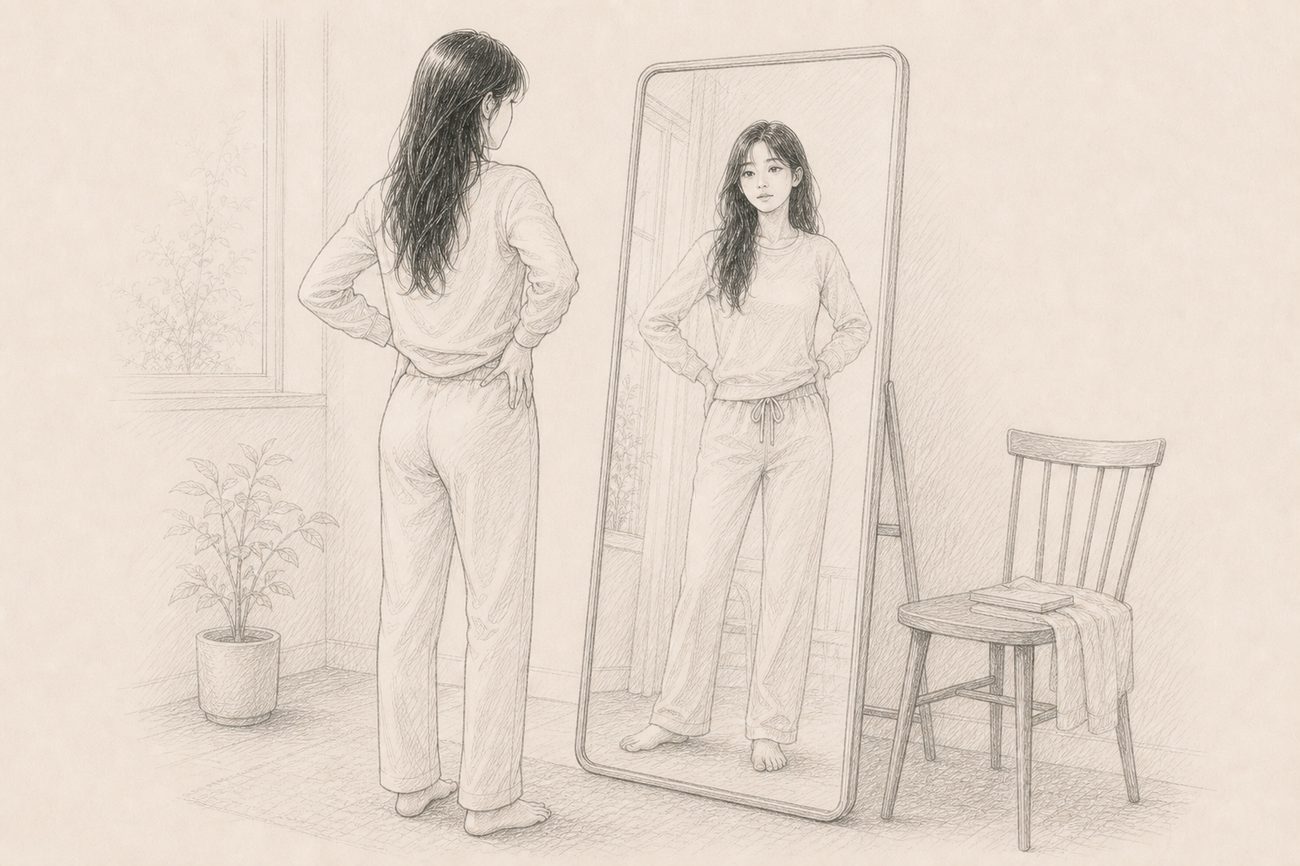
You're standing in front of the mirror getting dressed when something catches your eye. Your shoulders don't look quite level. Your hand drifts down to your waist. Is one hip sitting lower than the other, or have you always looked like this? From that moment on, every time you pass a mirror, you're checking your pelvis.
"Your pelvis is slightly misaligned." If a healthcare provider has said this to you, that feeling is familiar. Maybe it was a doctor, a physical therapist, or a fitness instructor. Wherever you heard it, everything changed in how you think about your back pain. Now when it hurts, your first thought is: "Of course—my pelvis is out of alignment."
So you tried to fix it. You bought a pelvic correction pillow. You spent weeks rolling out your pelvis with a foam roller every day. You signed up for Pilates and committed to two months of classes. But the pain stayed exactly the same. Is your pelvis beyond correction, or are you doing something wrong? Eventually, you start blaming yourself.
If any of these three things sound familiar, you're not alone. And the chances are good that it's not because you're not trying hard enough.
Today's article takes that one-liner—"your pelvic misalignment is the cause"—and asks: what does research actually agree with, and where does it diverge? The short answer: that explanation is likely too oversimplified.
This isn't an article telling you to ignore your pelvis. It's an article asking: "If my pelvis were really the problem, why doesn't correcting it make the pain go away?"—and then finding the answer together.
Everyone Hears About Pelvic Misalignment at Some Point
"Your pelvis is anteriorly tilted." "Your legs are slightly different lengths." "Your pelvis is rotated slightly to the right." "Your pelvis is asymmetrical."
Search for back pain solutions and you'll hear one of these at some point. The diagnosis changes slightly depending on who's looking, but the conclusion is always the same: "Your pelvis is the problem."
And the moment you hear it, the way you see your body shifts. You notice your pelvis when you walk. You notice it when you sit. When you stand in front of a mirror, your eyes go straight to your pelvis. Asymmetries you never saw before suddenly jump out at you—and you can't even remember if they were there before the pain started or if they appeared because of it.
The attempts to fix it pile up. You buy a pelvic corrector. You find pelvic alignment stretches on YouTube and follow along. You build a workout routine targeting "pelvic asymmetry." Two months pass and your back still hurts. Three months pass and nothing has changed.
That's when a thought creeps in: "Am I doing this wrong? Or is my body just one that can't be corrected?"
The moment that self-doubt arrives, it's worth pausing. It might not be that your effort is insufficient. It's possible the direction you've been pointed in was slightly off from the start.
What Does Research Actually Say? Static Pelvic Asymmetry and Back Pain Have No Strong Connection
Researchers asked the same question: "Do people with asymmetrical pelves really experience more back pain?"
In 1999, a U.S. study of 282 people compared 144 patients with back pain to 138 without it. The finding: pelvic asymmetry showed no clinically meaningful association with back pain. This was Dr. Levangie's research, published in the journal Spine. The researcher wrote directly: "If pelvic asymmetry does not exist, then the assessment and treatment strategies predicated on its existence require reconsideration."
That might not land immediately. You might think: "Shouldn't people with crooked pelves hurt more than people with straight ones?" Honestly, when writing this article, I had the same reaction at first.
In 2020, a similar review appeared. A systematic review in BMC Musculoskeletal Disorders examining the relationship between chronic non-specific back pain and pelvic asymmetry concluded: "The empirical evidence supporting this relationship is currently insufficient."
By 2024, the scope got much larger. A meta-analysis combining 46 studies—5,097 people with back pain and 6,974 without—reached this conclusion, quoted directly from the original: "While some measures like pelvic tilt may be altered in people with back pain, results vary so widely between studies that definitive conclusions are difficult to draw." This was published in Disability and Rehabilitation.
Notice the word "may." The paper says "may be altered," not "must be altered." Not "definitely changes"—"could change."
The American Physical Therapy Association (APTA) clinical practice guidelines point the same direction. Rather than focusing on "correcting static alignment," they emphasize neuromuscular re-education—retraining your muscles to respond properly when you move—and core stability.
Eight Out of Ten Pain-Free People Have Pelvic Tilt—Asymmetry Is Within the Normal Range
Here's a follow-up question: "How many people have perfectly aligned pelves with zero asymmetry?"
A 2011 study in the British journal Manual Therapy, conducted by Herrington, answers this directly. Researchers measured the pelves of 120 people with no back pain whatsoever—completely symptom-free individuals.
85% of men showed anterior pelvic tilt. 75% of women did too.
In other words, a pelvis tilted slightly forward is present in the vast majority of people without pain. Hearing "your pelvis is tilted forward" doesn't mean that tilt caused your pain. It means you have something most people have.
Pelvic asymmetry follows the same pattern. A 2023 study in the Journal of Experimental Orthopaedics measured pelvic obliquity in healthy people and found the normal range spans from 0 to 5.6 degrees. A pelvis that aligns perfectly symmetrically is actually the exception, not the rule.
That feeling you get in front of the mirror when your shoulders don't quite match? That feeling might not be a warning sign at all. You can actually relax a bit.
Of course, this doesn't mean "never think about your pelvis again." It means: "The fact that I see asymmetry doesn't automatically make it the culprit behind my pain." The numbers 85% and 75% tell you that asymmetry is common, not that everyone with asymmetry lives pain-free. But the logic that asymmetry directly causes pain? Research doesn't support that as strongly as we've been led to believe.
So Why Does Pelvic Misalignment Get Blamed So Often?
It's true that pelvic issues and back pain often appear together. That's hard to deny. But the direction of that relationship might not be what we think.
Consider this: on rainy days, more people carry umbrellas. But umbrellas don't cause rain. They appear together. Your pelvis and back pain might work the same way—they show up at the same time, but one isn't necessarily pulling the other along.
Here's a concrete example: sitting for long hours can shorten the muscles at the front of your hip—the hip flexors, the muscles that bring your knee toward your torso. When these muscles shorten, your pelvis's position gets affected. This is widely accepted in musculoskeletal science.
But here's what matters: the direction. The real sequence might be: "I sit all day, so my hip flexors shortened, which affected my pelvis." That's the opposite direction from "My pelvis is misaligned, so my back hurts."
Leg-length differences are interesting too. A 2015 study analyzed leg-length discrepancy and back pain across different occupations. For people who stand while working (like meat-processing workers), leg-length differences showed a connection to back pain. For people who sit at desks, the connection was much weaker.
Here's what that tells us: "Someone with asymmetry might stay pain-free if their daily movement compensates well for it. Someone without obvious asymmetry might develop pain if their movement patterns are poor."
Translation: "How my pelvis looks" matters less than "how I spend my day." Measuring your pelvis in the mirror might be less important than counting how many hours you sit without moving. Your daily habits might be a bigger variable than your pelvic shape.
When this perspective shifts, your approach changes too.
So What Should You Actually Do? What Research Consistently Points Toward
The APTA clinical practice guidelines don't emphasize "straightening out your static alignment."
The core of their guidance, simplified, has three parts:
First: neuromuscular re-education. This means retraining your muscles to fire at the right time with the right amount of force when you move. It's not about holding a perfect posture. It's about teaching your muscles to work correctly within movement.
Second: dynamic stability. This isn't the ability to hold a fixed position. It's the ability to keep your spine protected while you're moving. Your pelvis doesn't need to be "locked" into one position. Your supporting muscles need to do their job while you move.
Third: strength and endurance in your core and pelvic muscles. The focus is on muscle function, not alignment.
In plain terms: instead of treating your spine like a rigid structure that needs to be "corrected," you're waking up living muscle and teaching it to do its job properly.
So what actually helps? Here's the direction that works:
Stand up and move for 1–2 minutes every 30–50 minutes. Not an elaborate exercise routine. Just getting up on your walk to the bathroom, or taking the long way to get water. This alone prevents your hip flexors from stiffening up in one position.
Dynamic stability exercises like dead bugs or bird dogs. Lying on your back and lifting opposite arms and legs in a controlled pattern. You're not building six-pack abs. You're training your trunk to stay stable while your limbs move.
Glute bridges. Lie on your back, knees bent, and lift your hips. This wakes up your glute muscles. When your glutes weaken, your pelvic stability drops with them.
Walking. The simplest and most powerful dynamic stability training. While you walk, your pelvis naturally rotates side to side, and your core and hip muscles work together.
About pelvic correction pillows and supports: they don't create alignment. At best, they temporarily reduce the effort your muscles need to make to hold a position. Real change comes from your muscles waking up. The more you rely on a tool, the less work your muscles do.
That Said, There Are Times When You Should Get Your Pelvis Checked—Knowing the Difference Between Warning Signs and Normal Variation
Everything so far means: "Static pelvic asymmetry probably isn't the cause of your back pain." It doesn't mean: "Ignore all pelvic problems."
If you experience any of these, seeing a healthcare provider for pelvic, spine, and nerve evaluation makes sense:
- Your legs look noticeably different lengths, and you feel yourself tilting to one side when you walk or stand
- One leg feels numb or weak—test this: can you stand on the tips of your toes or your heels on one side but not the other?
- Changes in bladder or bowel control—this is an emergency signal. Go to the hospital immediately
- After a fall or car accident, your pelvis feels positioned differently
- Pain lasts longer than 6 weeks and clearly disrupts your daily life
If any of these apply, accurate diagnosis comes first. But if none of these fit you, the fact that your shoulders look slightly uneven in the mirror probably isn't a sign of disease.
Every body is different. What's true in this article might not apply to everyone. This article doesn't replace medical diagnosis or treatment.
The Bottom Line
Your pelvis might not be crooked because your back hurts. Your back might hurt, and as a result, your pelvis looks crooked. The solution isn't alignment—it's waking up your muscles.
The starting point is today: stand up from your desk every 30 minutes and walk for just 1 minute. Not a pelvic correction routine. Just standing up, drinking some water, and moving. That's the smallest thing you can do right now.
I won't promise this one habit fixes your back. But if the hand that was searching for "pelvic correction pillow" instead reaches down to stand up and walk today, that's the beginning of a small shift. You can think about your pelvis later.
Research on pelvic asymmetry continues to evolve. But the current consensus across studies leans toward: "Don't get caught up in asymmetry—focus on recovering movement."
References
- Levangie PK. "The association between static pelvic asymmetry and low back pain." Spine. 1999.
- "The association between pelvic asymmetry and non-specific chronic low back pain." BMC Musculoskeletal Disorders. 2020.
- "Postural asymmetry in low back pain—a systematic review and meta-analysis." Disability and Rehabilitation. 2024.
- Herrington L. "Assessment of the degree of pelvic tilt within a normal asymptomatic population." Manual Therapy. 2011.
- "Slight pelvic obliquity is normal in a healthy population." Journal of Experimental Orthopaedics. 2023.
- "Leg-length discrepancy is associated with low back pain among those who must stand while working." 2015.
- "Low Back Pain: Clinical Practice Guidelines from the Orthopaedic Section of the American Physical Therapy Association." JOSPT. 2012.
Medical Disclaimer: This article is for informational purposes only and does not replace professional medical advice, diagnosis, or treatment. Always consult a qualified healthcare provider before starting any new exercise program or if you experience persistent pain, numbness, weakness, or changes in bladder or bowel function.
— H.Sol, InsightOn BodyLab


댓글
댓글 쓰기